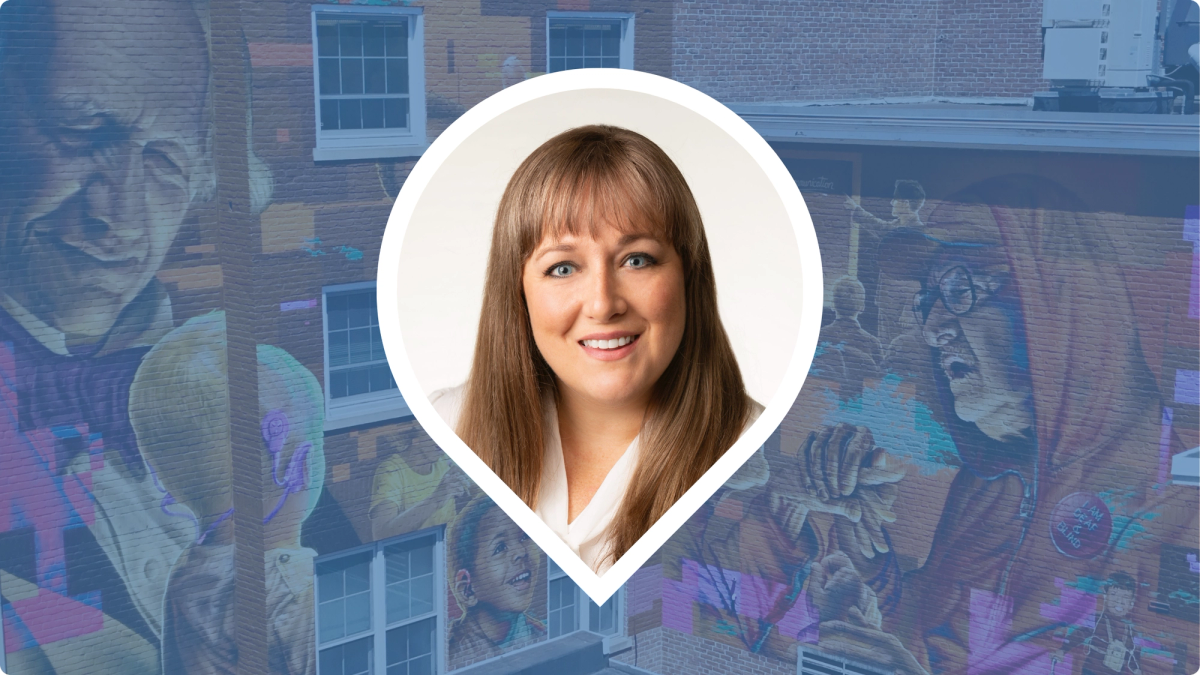
Patron in the City: Megan Allen
We believe that passionate individuals can spur change in their communities. We refer to those individuals as Patrons in the City, dedicating their time, sweat, and energy to building vibrant communities.
In 1817, West Hartford, Connecticut became the home of the first American School for the Deaf, which led to other schools nationwide finally incorporating education and programming designed for Deaf and Hard of Hearing (DHH) children as well. West Hartford’s deep, historic connection to inclusivity and accessibility continues today with the West Hartford Public Schools Deaf Services program, currently supporting over 80 students and families through access to ASL interpreters, specialized Teachers of the Deaf, speech therapists, and other services.
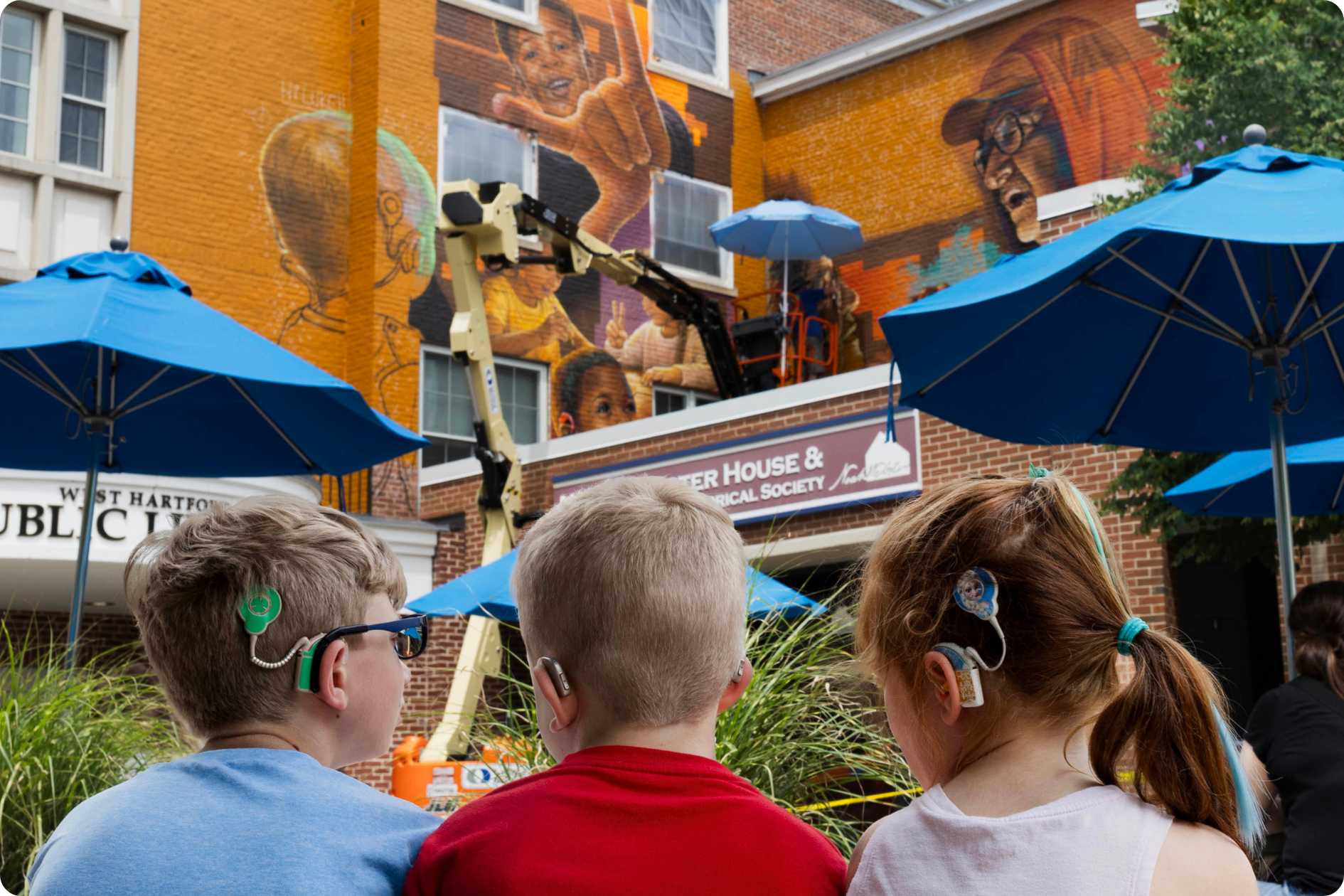
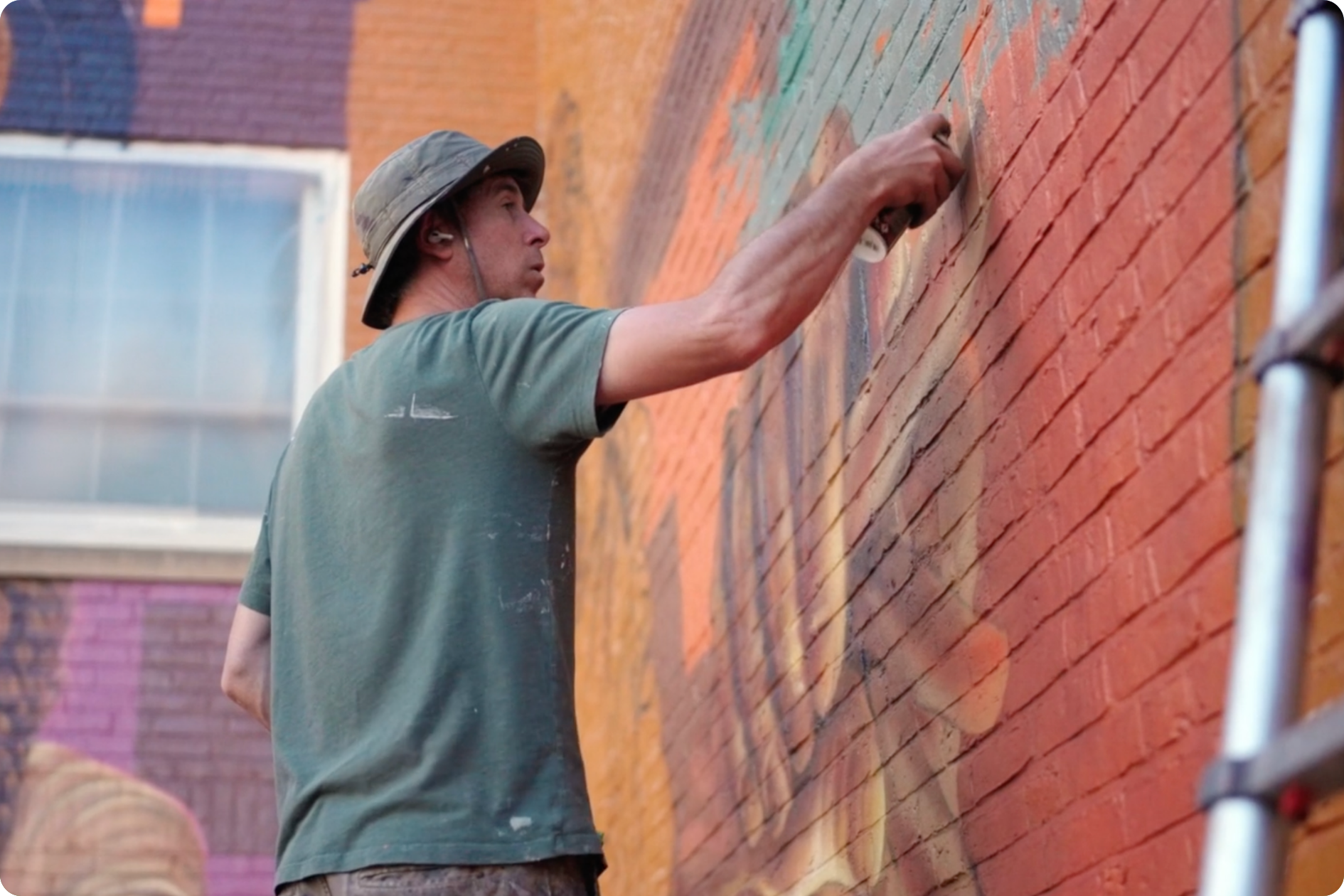
In January, the West Hartford Public Schools Deaf Services team launched a campaign to raise funds to celebrate the DHH community: the Voices in Color mural. Led by Megan Allen, a local nurse practitioner and mother within the Deaf community, the campaign met its goal in just one week, securing a match of $6,000 from Sustainable CT’s Community Match Fund program. It continued to raise funds from the community, collecting an impressive $17,096 by the time it closed in March. Together, Megan, the Teachers of the Deaf, artist Michael Rice, and the West Hartford DHH community have created the nation’s first fully-accessible public artwork centered on Deaf community belonging and communication access.
With the extra funds, the mural team is able to expand on the inclusivity and accessibility of the project by adding a 3D tactile replication of the mural later this year so all members of the DeafBlind community can engage, enjoy, and feel represented. The team was also able to put together an incredible short film documenting the inspiration, process, and results of the mural project.
We spoke with Megan to learn more about creating intentional inclusivity that honors and respects underrepresented communities. She enjoys consulting on nonprofit and community initiatives (like this mural project) that are focused on inclusion, improving access, strengthening health literacy, and supporting vulnerable populations.
Patronicity: Why do you love where you live and work? Tell us about your community!
Megan: We moved to West Hartford in 2021 and it is the first place my family truly felt seen. As a military family, we moved often, and finding community for my Deaf child (and honestly ourselves) was not always easy. When we arrived here, everything changed. West Hartford is a place where inclusion is not just a value but a daily practice. My son signs with the staff at our local donut shop, sees friends who share his language or wear devices, and grows up in a town that celebrates communication access and belonging.
Professionally, I have worked in women’s health, family practice, and military medicine around the country, and moving to Connecticut and seeing health resources and programs in West Hartford is so refreshing. Families and community leaders show up for one another. Educators collaborate closely with parents. Local partners step forward to support projects that strengthen connection. The Deaf and Hard of Hearing Community Mural is a perfect example. It brought together Teachers of the Deaf, families, artists, and neighbors who wanted to create something joyful and lasting. That spirit is why I love living and working here.
Patronicity: What was your project, and why is it necessary?
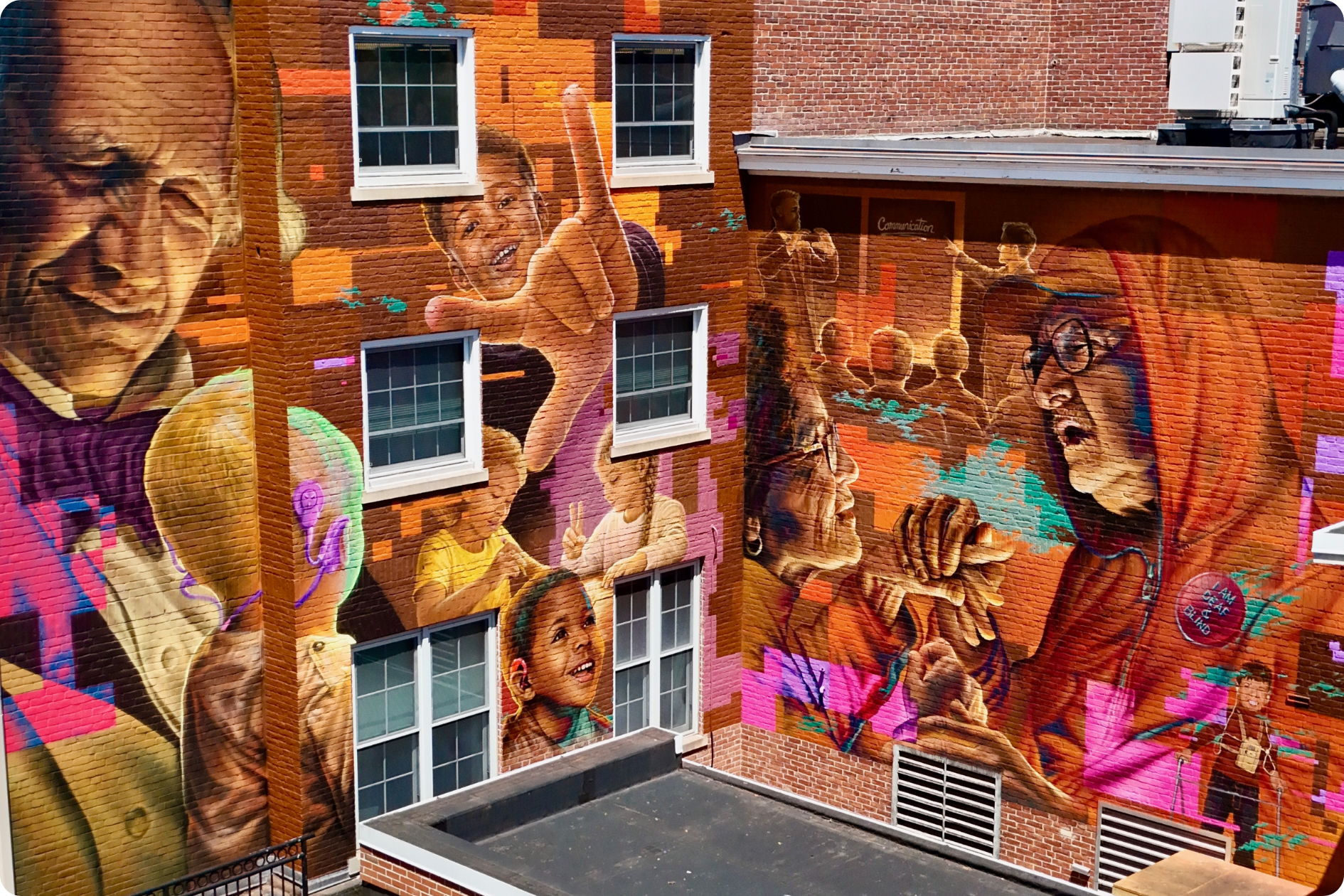
Megan: The Deaf and Hard of Hearing Community Mural Project is a public art initiative created to celebrate Deaf culture, communication access, and the diverse ways Deaf, DeafBlind, and Hard of Hearing people connect with the world. The mural was designed and painted in collaboration with Deaf students, families, Teachers of the Deaf, community partners, and a muralist who worked closely with the community to ensure the artwork reflects lived experience.
This project was necessary because Deaf and Hard of Hearing children rarely see their language or identity represented in public spaces. Visual language access is essential, yet often overlooked, and families frequently navigate environments that do not recognize or support their communication needs. The mural brings visibility to ASL, tactile ASL, hearing technology, and the full spectrum of communication modalities used in our community. It creates a place where Deaf children can see themselves honored and where neighbors can learn about the importance of communication access.
We are now expanding the project by creating a fully tactile replica of the mural so DeafBlind community members can explore and enjoy the artwork through touch. This next phase will make the installation one of the only completely accessible public art pieces dedicated to communication access, ensuring every person can experience the story and pride represented in the mural.
Patronicity: What inspired you to get involved or build this project?
Megan: I became involved in this project when my son’s Teacher of the Deaf reached out with questions about fundraising. I’ve managed many fundraising efforts in the past, so I was happy to help them get started. As the project grew, it became clear that the teachers were carrying an enormous workload at school and didn’t have the capacity to manage a large community initiative on top of their daily responsibilities. I offered to take on more of the project management so they could stay focused on supporting students.
What inspired me to stay involved was seeing how much this project meant to our Deaf, DeafBlind, and Hard of Hearing community. The teachers had a powerful vision, the artist they were working with was incredible, and I wanted to make sure they had the support needed to bring it to life. Stepping in felt like the right way to honor their work, lighten their load, and help create something meaningful for our kids and families.
Patronicity: What have been the results of your crowdfunding campaign?
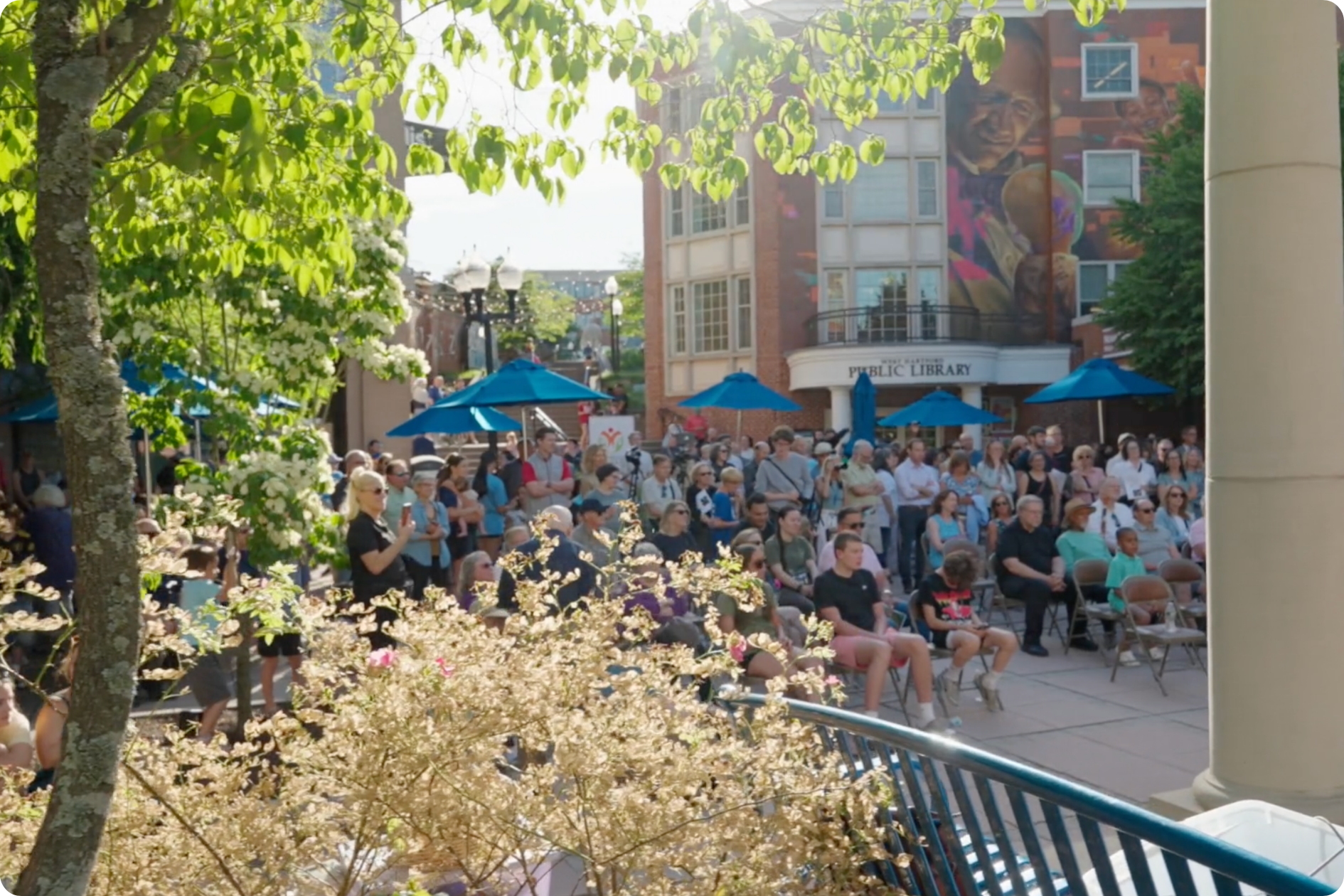
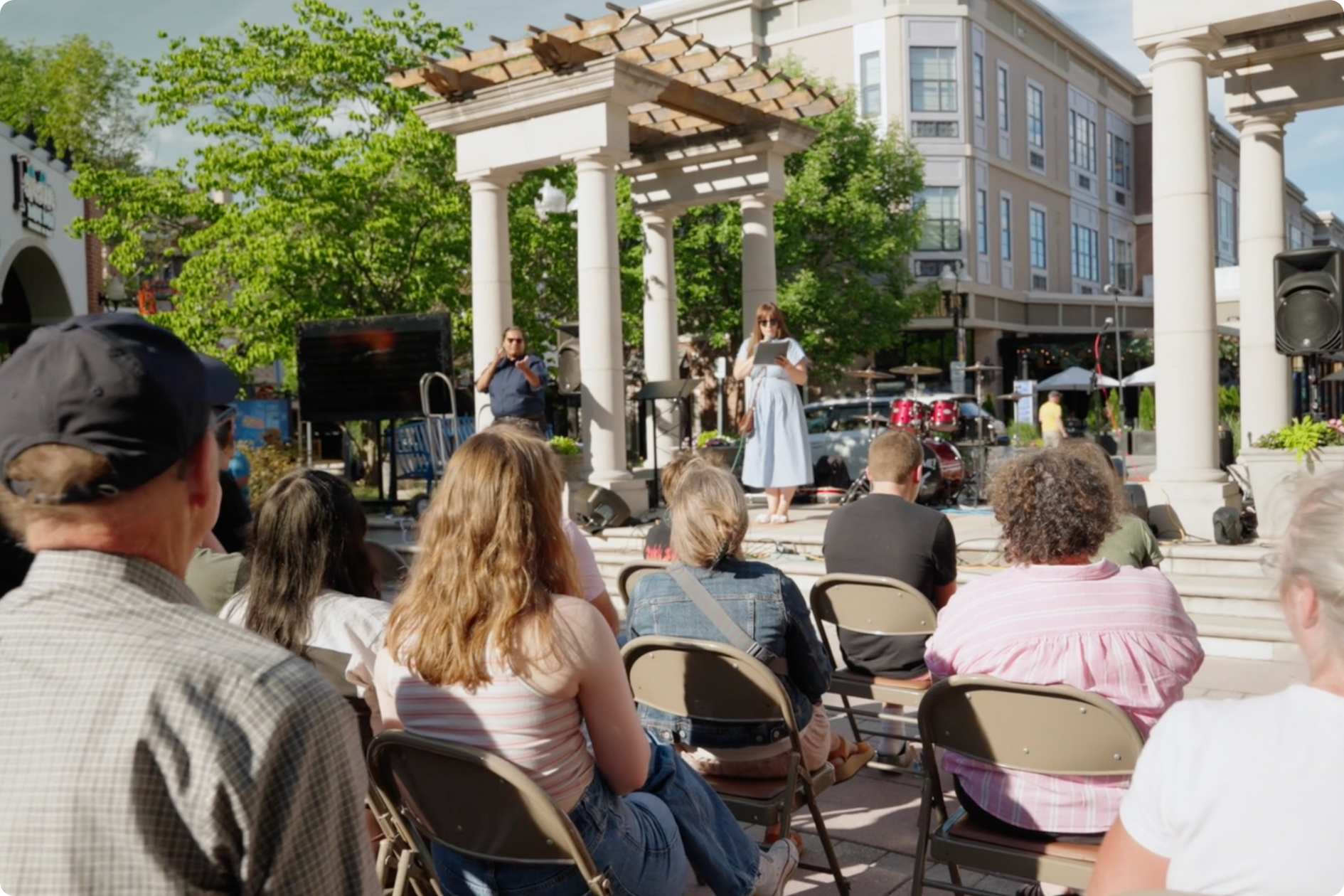
Megan: Our crowdfunding campaign was incredibly successful and showed just how much the community values art, togetherness, and Deaf culture. We raised the full amount needed to design and paint the Community Mural, and the campaign brought in support from families, educators, neighbors, and local partners across West Hartford. The funding allowed us to hire a professional muralist, host a community fundraising kickoff and unveiling, and create public artwork that now serves as a joyful landmark for our entire town.
The campaign also sparked new connections. Families who had never met before came together, our Deaf Services team felt supported, and community members learned more about how our school supports DHH students, types of communication access, and Deaf identity. Because of the momentum from the campaign, we are now moving forward with the next phase: creating a tactile replica of the mural so DeafBlind community members can explore and enjoy the artwork through touch. The crowdfunding effort didn’t just fund a mural: it built a stronger, more connected community.
Patronicity: You raised nearly three times your crowdfunding goal! What do you attribute that success to?
Megan: I did not expect to raise nearly three times our original crowdfunding goal. We knew the project mattered, but the level of support we received was far beyond anything we imagined. The success came from the strength of our community and the way people rallied around the idea of making Deaf, DeafBlind, and Hard of Hearing children visible in a joyful, public way.
A major part of that success was the Patronicity platform itself. We were blown away by how easy it was to use. Their guidebooks, tips, staff support, and overall program made the entire process smooth and stress‑free. It truly couldn’t have been easier, and having such a supportive platform allowed us to focus on telling our story and engaging the community rather than worrying about logistics.
We also had incredible support from the school district, local media partners, and Connecticut organizations dedicated to Deaf and Hard of Hearing communities. Their willingness to amplify the project, share our campaign, and stand behind the vision made a tremendous difference. Families, educators, and community partners shared the fundraiser widely, and the story resonated with people who wanted to invest in inclusion.
The response showed that when a project reflects real community needs and is supported by strong partners, people show up. This campaign proved that.
Patronicity: How has the community responded to your project? How has the project changed your community?
Megan: The community’s response has been incredibly enthusiastic and heartfelt. Families, educators, neighbors, and local partners have embraced the mural as a joyful celebration of Deaf, DeafBlind, and Hard of Hearing identity. Children point out the signs they recognize, our Teachers of the Deaf will use the mural as a teaching tool, and community members often stop to take photos or share stories about their own connections to the Deaf community. We also created a short film about it that highlights the need for this project and what our community means. The project has sparked curiosity and learning, with many people asking questions about sign language, Deaf culture, and tactile communication. It has also strengthened relationships among families who had not met before, creating a sense of shared pride and connection.
The project has changed our community by making communication access visible in a public space. It shifted the conversation from accommodation to celebration. The mural has become a landmark that signals West Hartford’s commitment to belonging, and it has encouraged more conversations about access in schools, local businesses, and community organizations. The upcoming tactile replica will deepen that impact by ensuring DeafBlind community members can explore and enjoy the artwork through touch, reinforcing that inclusion must be intentionally built.
Patronicity: What do you hope community members take away from this project?
Megan: I hope community members walk away with a deeper understanding of how important communication access is and how many different ways people connect with the world. The mural celebrates ASL, tactile communication, hearing technology, and the full spectrum of Deaf, DeafBlind, and Hard of Hearing experiences. My hope is that when people see it, they recognize that inclusion is something we build together and that every person deserves to feel seen in their community.
I also hope families feel pride when they visit the mural. I want Deaf and Hard of Hearing children to see their language honored in a public space and to know their identity is valued. For neighbors who may not have had much exposure to Deaf culture, I hope the mural sparks curiosity, learning, and a desire to make communication access part of everyday life.
With the upcoming tactile replica, I hope community members understand that accessibility must be intentional. Inclusion is not just visual. It is something we design thoughtfully so everyone can participate. If people walk away feeling more connected, more aware, and more committed to building a community where everyone belongs, then the project has done exactly what we hoped it would.
Patronicity: How did the SCT matching dollars improve your overall project and provide greater impact?
Megan: The Sustainable CT matching dollars were absolutely transformative for our project. The match created immediate momentum and signaled to the community that this mural was not only meaningful but also backed by a trusted statewide partner. That credibility encouraged families, educators, neighbors, and local organizations to give generously, ultimately helping us raise nearly three times our original goal.
The matching funds also allowed us to expand the scope of the project. Instead of focusing solely on the mural, we were able to invest in the community events, the short film, and the upcoming tactile replica that will make the artwork accessible to DeafBlind community members. The match ensured that our commitment to inclusion could be fully realized, not just envisioned.
Beyond the financial impact, the Sustainable CT partnership strengthened community engagement. Local media partners amplified the story, the school district promoted the campaign, and Connecticut organizations serving Deaf and Hard of Hearing residents shared the fundraiser widely. The match created a sense of shared ownership and pride, turning the project into a true community effort.
Patronicity: What could other communities learn from your project?
Megan: Other communities can learn that meaningful inclusion starts with listening closely to the people most affected and building projects that reflect their lived experiences. Our mural succeeded because it was shaped by Deaf, DeafBlind, and Hard of Hearing students, families, and educators who knew exactly what representation and access should look like. When communities center the voices of those they aim to serve, the work becomes more authentic and more impactful.
Another key lesson is the importance of partnership. We learned that communities should lean into strong organizations like Sustainable CT and other local and statewide partners. Their expertise, guidance, and matching support elevated our project far beyond what we could have accomplished alone. Communities should not hesitate to ask for donations, explore partnership opportunities, or reach out to organizations whose missions align with their goals. Collaboration creates momentum, credibility, and shared ownership.
Finally, communities can learn that public art is a powerful tool for education and connection. Our mural sparked conversations about ASL, tactile communication, identity, and access. When art is placed in everyday spaces, it invites people to learn, reflect, and engage with one another in new ways.
Patronicity: If someone wanted to become more involved in their community, what advice would you give them?
I would encourage anyone who wants to get more involved in their community to start by listening. Pay attention to what people say they need, learn from those who are already doing the work, and look for places where your skills and energy can make a difference. Community involvement grows naturally when you begin with curiosity and respect.
I also believe people should not be afraid to reach out. Some of the strongest parts of our project came from simply asking questions, offering help, and connecting with organizations that share similar values. Lean into great partners like Sustainable CT and other local or statewide organizations. They exist to support community‑driven work, and their guidance can make a project stronger, more sustainable, and more impactful.
Another piece of advice is to be bold about asking for donations and exploring partnership opportunities. People and organizations often want to contribute, but they need to be invited. When you share a clear purpose and a meaningful vision, others will step forward. Collaboration is what turns a good idea into a community movement.
Finally, remember that involvement doesn’t have to be complicated. Show up, ask how you can help, and be willing to take on small tasks at first. Over time, those small steps build relationships, trust, and momentum. Community work is most powerful when it is shared, and everyone has something valuable to offer.
BE THE CHANGE.
Do you have an idea to make your Connecticut community more equitable, sustainable, and vibrant? Contact Sustainable CT at funding@sustainablect.org to share your great idea and start crowdfunding your vision. Whether you’re dreaming of more green spaces, solar for public areas, greenways for biking and walking, murals and other public art, green jobs programs, or community gardens, Sustainable CT’s Community Match Fund can help by providing fast, flexible funding and support for sustainability projects that engage your Connecticut community. Learn more at www.patronicity.com/sustainablect.