
Patron in the City: Alice James
We believe that passionate individuals can spur change in their communities. We refer to those individuals as Patrons in the City, dedicating their time, sweat, and energy to building vibrant communities.
In 2024, Patronicity launched a brand new initiative to support and encourage small-scale, big-impact change across America: the Lighter, Quicker, Cheaper Challenge. Through this program, changemakers from across the country submitted their project ideas and rallied their communities to raise the funds they needed to make their dream a reality.
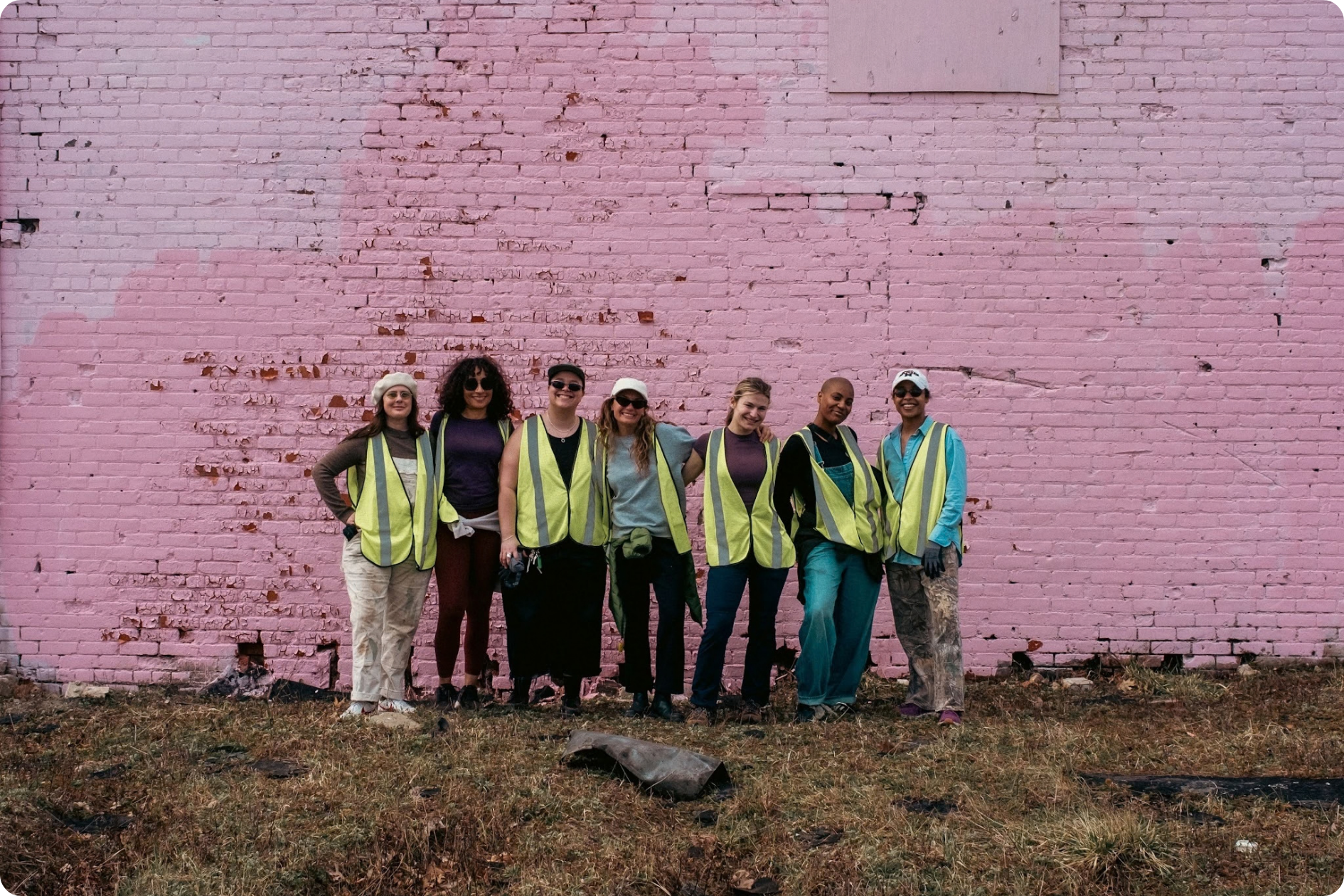
One of these campaigns was Love, Not Litter, spearheaded by Alice James and Jade James-Gist from AboutFaceDetroit, a family-founded nonprofit that works alongside neighbors to strengthen Detroit’s East Village through home exterior repairs, gardening and beautification, placemaking, and neighborhood stewardship.
By the end of the Challenge window, AboutFaceDetroit’s anti-litter campaign exceeded its initial goal by $3,500, collecting funds from 179 unique patrons and winning the bonus $5,000 LQC Challenge grant. With $13,500, they were able to transform their community by installing numerous permanent trash cans and educational signage to support neighborhood beautification and safer streets.
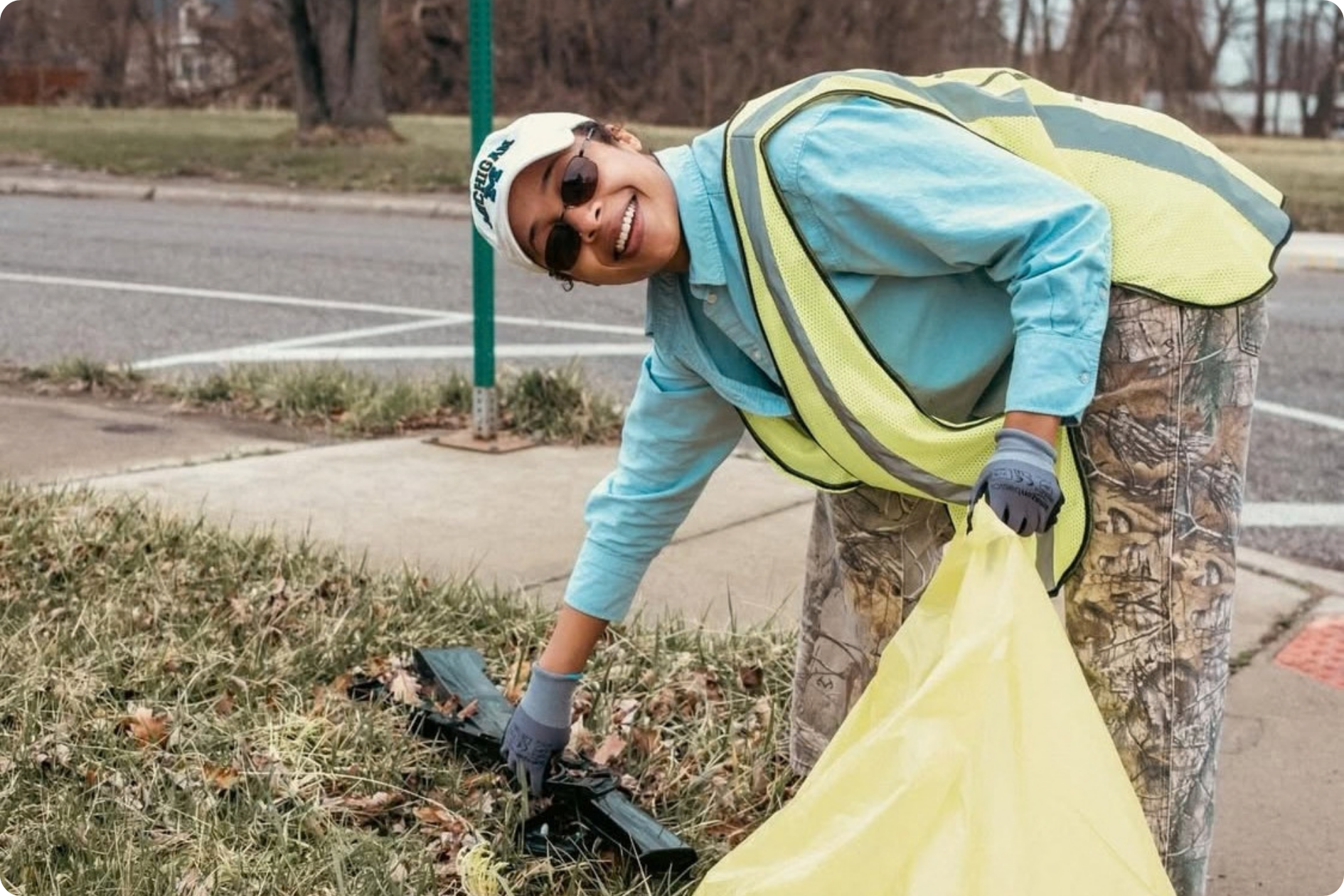
Alice James is a lifelong Detroiter and President of AboutFaceDetroit. Her work is deeply hands-on: you can often find her walking the neighborhood, picking up litter, placing anti-litter signs, checking public trash cans, talking with neighbors, and encouraging residents to join her in caring for the blocks they call home. Through her nonprofit, she works to make small, visible investments that build pride and remind people that caring for a neighborhood is something everyone can participate in.
We sat with Alice to talk more about how collective, localized improvements build better communities.
Patronicity: Why do you love where you live and work? Tell us about your community!
Alice: I love East Village because it is home. Our family has deep roots on Detroit’s East Side. I was raised and lived here until I was an adult with a young family, and this is a neighborhood full of people who have cared for their homes and their blocks for generations. We have longtime residents, families raising children, elders who have been here for decades, and newer neighbors who want to be part of the community.
What I love most is that people notice when someone cares. If you’re outside cleaning, planting flowers, or working on a house, somebody will stop and talk to you. Those conversations matter. They remind you that a neighborhood isn’t just houses and streets, but it’s the people who live there and what we’re willing to do for one another.
Patronicity: What was your project, and why was it necessary?
Alice: Our project is called Love, Not Litter. AboutFaceDetroit was already spending hours every week picking up litter throughout East Village, and we realized that cleaning it up over and over wasn’t enough. We needed to make it easier for people to dispose of trash properly and also start a larger conversation about why littering happens and what all of us can do differently.
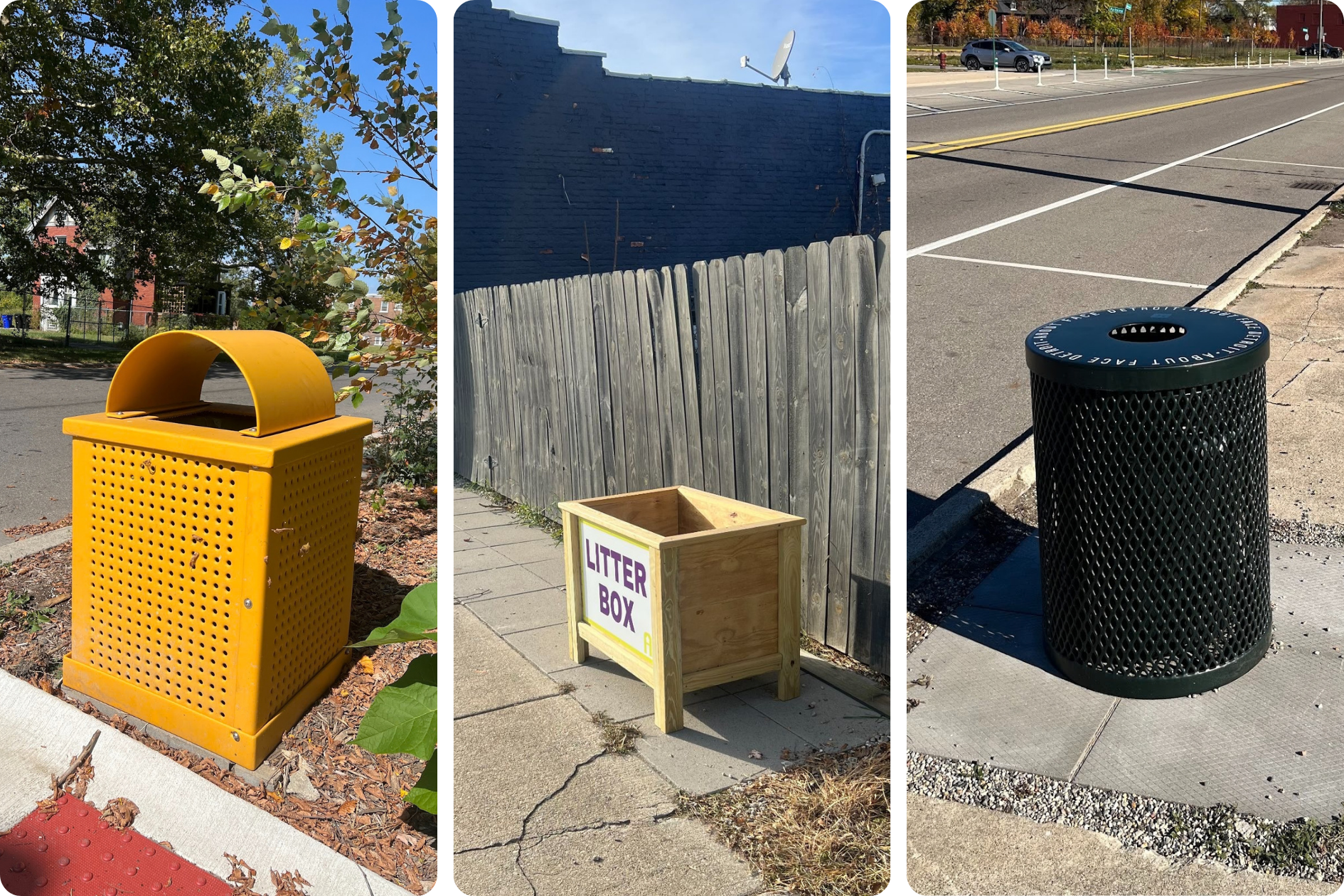
After being denied by the city to place more cans in our village, we began by putting a public trash can at East Vernor Hwy and Cadillac and saw that people actually stopped their cars, stopped walking – and used it. That simple experiment helped lead to the larger campaign. Through Love, Not Litter and Patronicity’s LQC Challenge, we’ve installed 13 public trash cans in the neighborhood and added signage and other anti-litter efforts around them. The cans are infrastructure, but the larger project is really about neighborhood stewardship and changing behavior.
Patronicity: What inspired you to get involved and build this project?
Alice: It came from being out here and seeing the same problem every day. I would clean an area and come back later and see litter again. Eventually you have to ask, “How can we stop this in the first place?”
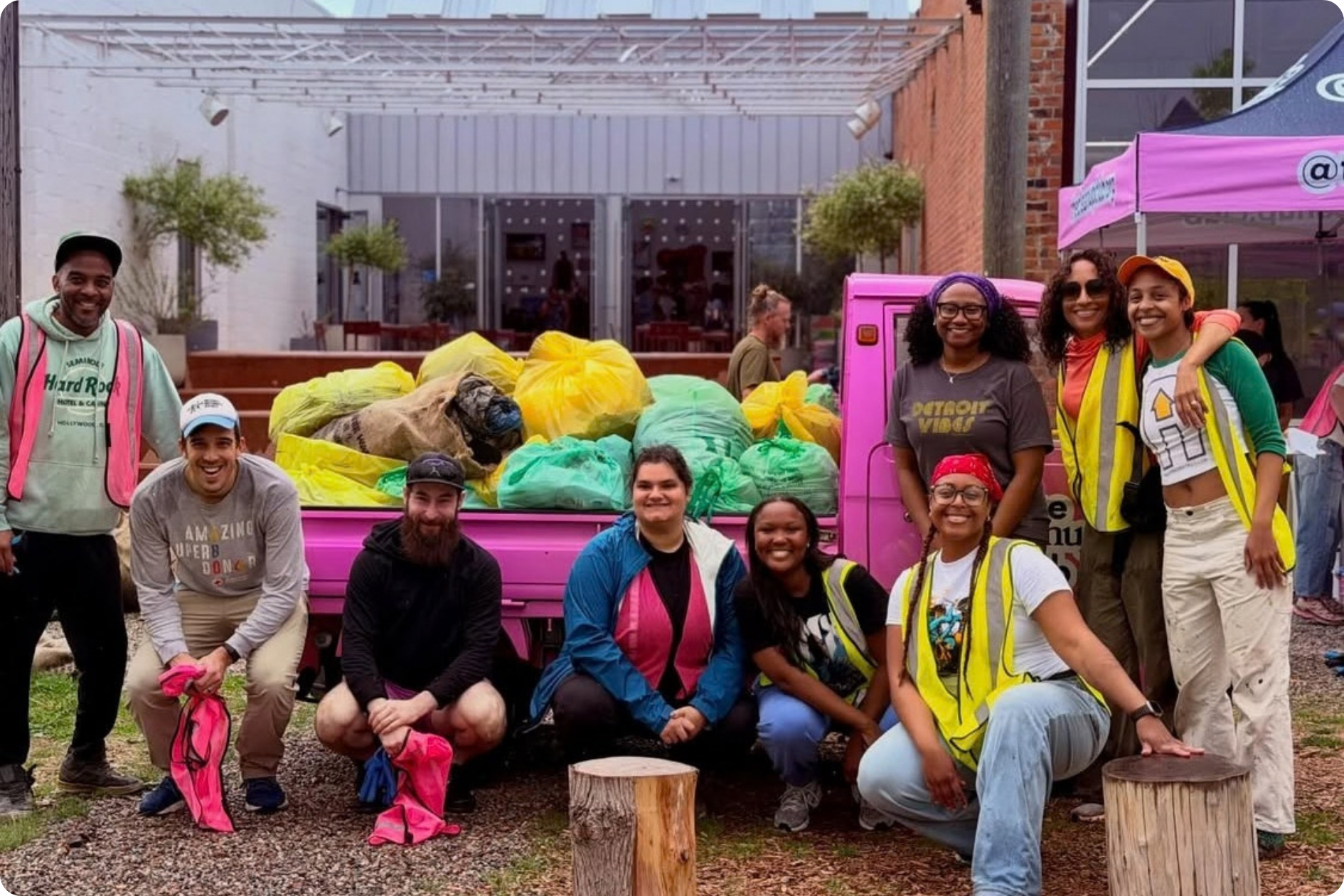
For me, the answer has been to keep showing up, but also to talk to people. I put out signs. I talk with neighbors and people stop their cars to chat when I’m outside. I encourage people to come clean with us. And when I see an opportunity to talk about the causes and behavior of littering itself, I do that too. You can’t expect one trash can or one cleanup day to change a neighborhood. It takes repetition and people seeing that somebody cares enough to keep at it. The litter has decreased tremendously but we still have a ways to go. No one should think their trash goes on our streets.
Patronicity: What have been the results of your crowdfunding campaign? How has the project changed your community?
Alice: The crowdfunding campaign gave us the resources to turn something we were doing informally and individually into a visible neighborhood effort. We originally raised $8,500 from 179 people, and winning the Lighter, Quicker, Cheaper Challenge brought another $5,000 to expand the work!
Today, AboutFaceDetroit has 13 public trash cans throughout East Village along with anti-litter signage, and we continue regular litter cleanup and stewardship across roughly a square mile of the neighborhood.
But one of the results I’m proudest of isn’t something you can count. People really recognize what we’re doing, and they talk to us about litter now. They use the cans. Neighbors have signed up to help clean through our Adopt-a-Block program. That means we’re beginning to make litter something we take responsibility for together rather than something everybody just walks past.
Patronicity: How has the community responded to your project?
Alice: The response has been encouraging. I’ve also learned that being visible matters. When people repeatedly see someone outside picking up litter, putting out a sign, or maintaining a space, it becomes an invitation. Sometimes a conversation starts simply because I’m outside doing the work. That’s one of the reasons I believe so strongly in being present in the neighborhood rather than only organizing from behind the scenes.
Patronicity: What do you hope community members take away from this project?
Alice: I want people to understand that the condition of our neighborhood belongs to all of us. You don’t have to start a nonprofit or organize a major project. Maybe you pick up the litter in front of your house. Maybe you use the trash can instead of throwing something out of the car. Maybe you help an older neighbor grab trash along their curb. Maybe you come outside when you see other people cleaning.
Those little decisions add up. I want people to feel proud of East Village and understand that they have a role in taking care of it.
Patronicity: How did participating in the Lighter, Quicker, Cheaper Challenge affect your overall project and provide greater impact?
Alice: The Challenge allowed us to think bigger! We knew the trash can idea worked because we’d already tested it on a small scale, but crowdfunding and the LQC grant allowed us to expand it across the neighborhood and add signage and education around it.
It also showed us how many people were willing to support a very practical neighborhood idea. 179 people contributed to the campaign, many through small-dollar donations. That was important to us because it showed that people don’t have to make a huge contribution to participate in community change. A lot of people doing something small can make something substantial possible.
Patronicity: What could other communities learn from your project?
Alice: Start with what you can see, and start small enough that you can actually do something about it. We didn’t begin with a huge plan to solve litter across Detroit. We were already cleaning our own neighborhood. We noticed that one trash can was being used, so we learned from that and expanded it.
I also think communities should be willing to experiment. We’ve tried different trash-can styles and different types of signage because we’re learning what works here. Community work doesn’t have to begin with a perfect solution. You can try something, listen to your neighbors, see how people use it, and improve it.
Patronicity: If someone wanted to become more involved in their community, what advice would you give them?
Alice: Go outside. You learn so much just by being present. Walk your block and talk to your neighbors. Notice what needs attention. If there’s litter, pick some up. If someone is already doing something positive, ask if you can help. You don’t have to wait until you have an organization, a grant, or a perfect plan. You can start with one thing you can actually do and do it consistently. People notice consistency, and eventually other people start joining you. That’s how community grows.
Grow your community.
The Lighter, Quicker, Cheaper Challenge is a recurrent Patronicity initiative that empowers local changemakers to develop strategies for implementing inexpensive, flexible, and quick improvements to enhance the quality of life in their communities. Through the Challenge, participating campaigns compete within a specified window to raise funds from the greatest number of unique patrons, with the winner taking home a bonus $5,000 grant. So far, the program has generated $85,199 for community projects from 2,087 patrons.
Get started on your page for change now at patronicity.com/lqc-grant.
If your organization wants to start its own challenge grant program to encourage change in your community, contact us at challenge@patronicity.com.